Filippo Rossi
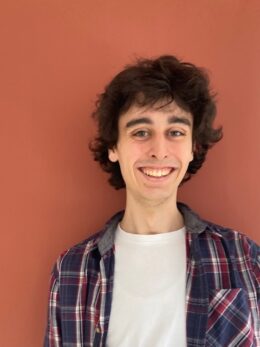
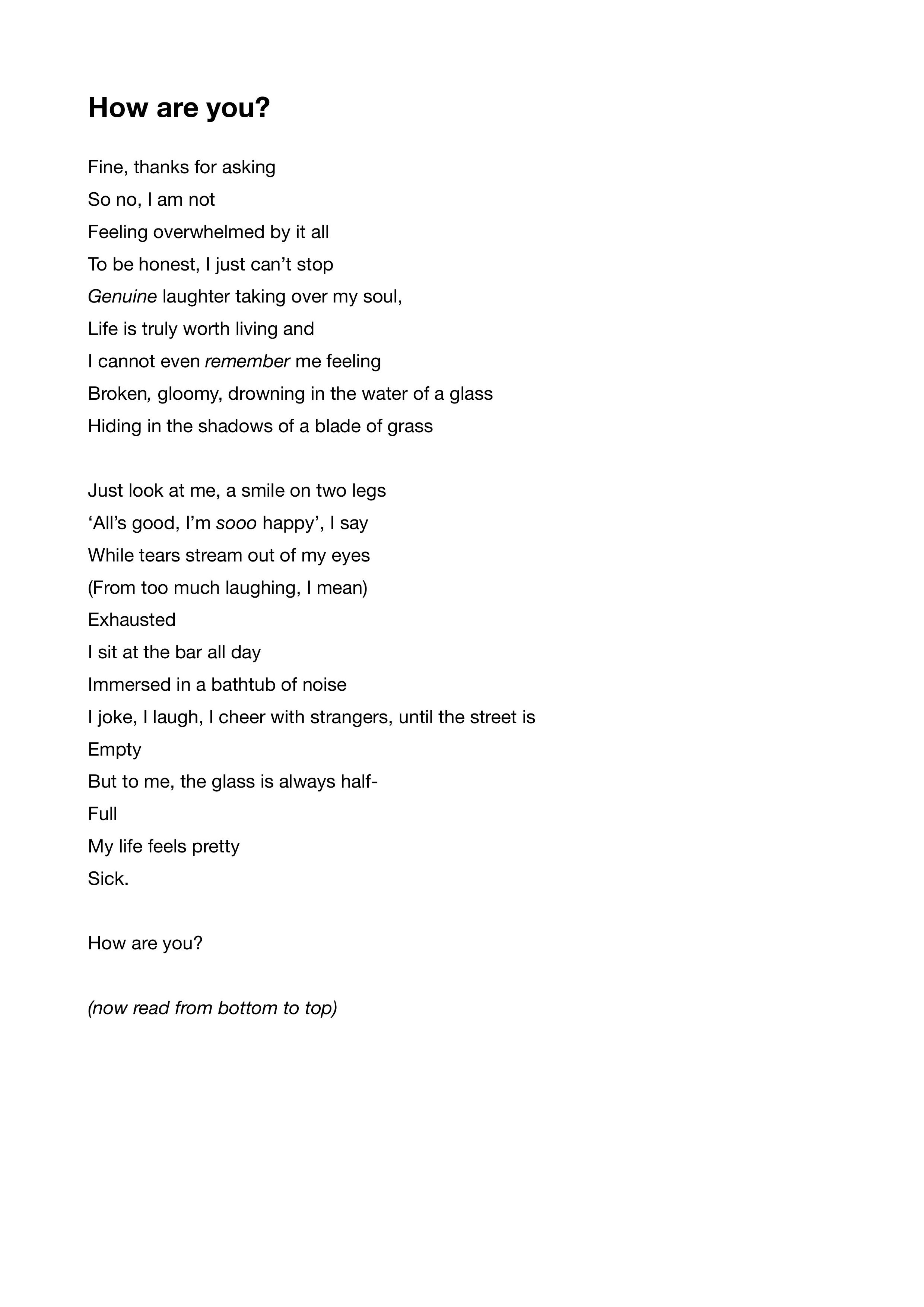
Filippo was winner of Ali May’s masterclass ‘Journalism 101’ with his film review of Nomadland. Filippo was also a runner-up for Deanna Rodger’s masterclass ‘Form in Poetry’, with his poem ‘How Are You?’
Filippo Rossi is a nineteen-year-old writer, poet and overall creative. He was born in Italy and now lives in green and rural Devon where he likes to walk in fields and woodlands for inspiration. Ever since an early age he has been writing and the masterclasses greatly helped him to explore new and exciting approaches to his writing. He is currently working on a short novel set in the rural countryside.
His poem ‘Carbon-12’ is a winning poem featuring in the UNBOXED About Us programme. In 2021 he was the second-prize winner in the Quay Words flash-fiction competition as well as being the runner up in the Marlborough Literature festival Love Books competition. His poetry has been commended on The Poetry Society’s YPN and one of his poems was selected and published in Ode to the Ash Tree poetry anthology.
Links to other pieces of Filippo’s work:
https://aboutus.earth/competition-winners/
https://www.marlboroughlitfest.org/love-books-2021-winners-runners-up/
https://www.local-devon-biochar-charcoal.co.uk/project/oatpp/
https://poetrysociety.org.uk/news/erasure-poetry-challenge-winners-announced/
-----
Nomadland film review
Between poetry and truth; a remarkable drama about van-living in the US
Based on the homonymous 2017 non-fiction book by journalist Jessica Bruden, Nomadland cries out with striking relevance about fragility, hardship and freedom in our troubled times. It shines light on the increasingly widespread phenomenon of millions of older Americans who, facing daunting financial struggles, have to take up the ‘nomadic’ lifestyle of van-living and travel around the US in search of work. This is the fifth film, following the acclaimed Songs my Brothers taught me (2015) and The Rider (2017), to be directed and adapted for the screen by Chloé Zhao. And it is beautiful. Released in autumn 2020 it has quickly become an international success, winning three Oscars (the most at the 2021 Academy Awards), the Golden Lion at the Venice Biennale, and earning Zhao her first Golden Globe for best Director.
When the US Gypsum mine in Empire, Nevada, shuts down in 2011, 62 year-old and strongly independent Fern (Frances McDormand), who has happily lived in Empire with her late husband Bo for many years, finds herself alone, jobless and “house-less”. Like millions of others living in the “tough times” following the 2008 markets crash, she is forced to leave her life behind and take to the road in an attempt to make ends meet. Early scenes show Fern coping with the hardships of a cold winter in her van before taking up a seasonal job at an Amazon packing facility. She then continues “down the road”, stopping in Quartzsite, Arizona with her friend and co-worker Linda May for an annual gathering of van-dwellers.
The film is closely intertwined with reality, with several real-life nomads (such as 75 year-old Swankie, Linda May and the van-living-community-guru Bob Wells who organises the Quartzite rendezvous) playing more or less fictionalised characters of themselves. Nomadland thus blurs the line between fiction and truth, resulting in an unusual yet successful cross between documentary and art house drama which provides an “entrée into the lives of resilient Americans meeting challenges with courage and humour” (Joe Martin, Real Change). And challenges certainly do abound. From a flat tire to a costly engine failure the film sees Fern do her best to get by. “I need work. I like work.” she replies to the job-centre worker who cannot do more than suggest the outlandish possibility of “early retirement”. Unable to find anything permanent Fern continues to take up a variety of seasonal jobs while travelling across Nevada, Arizona and California. One time it’s working at a sugar beet processing factory, another as kitchen assistant and as a camp host at Badlands National Park where she re-meets Dave (David Strathairn), a fellow van nomad who remains a close friend throughout the film.
Nomadland is certainly not a plot-focused film, viewers expecting the action-packed thrills of a James Bond movie will undoubtedly feel underwhelmed, but it is a film enamoured with people and the stories they tell are so powerful in their own right that quite rightly deserve to be brought to the forefront. Moreover, the loose and drifting rhythm of the film is subtly reflective of the nomadic lifestyle and evocative of its sense of aimlessness. And while similar films risk feeling stuck in places or not even taking off at all, Nomadland never stalls, rather it remains wonderfully alive and original throughout, taking care to avoid the pitfalls of clichés.
This success is in large part due to McDormand’s unquestioned talent. Her portrayal of Fern and of her transient lifestyle is honest but always dignified. Although the central themes may echo Nicholas Hytner’s The Lady in the Van, Fern is very far from being Miss Shepherd’s American double. Towards the end of the film one even gets the impression that although van-living has its obvious drawbacks it seems to provide Fern with the freedom she has somehow always longed for. After all, van-living is synonymous with a sense of liberty, with some characters wilfully choosing the lifestyle over a corporate career to embrace the freedom of the open road and “not waste any more time”. This sense of freedom is echoed by Joshua James Richards’ stunning cinematography of the vast, raw beauty of the American natural landscape which, accompanied by Einaudi’s musical mastery, gifts the film with a rare and richly poetic soul.
Nomadland is a film not to be missed.
© Filippo Rossi, 2021
© Filippo Rossi, 2021